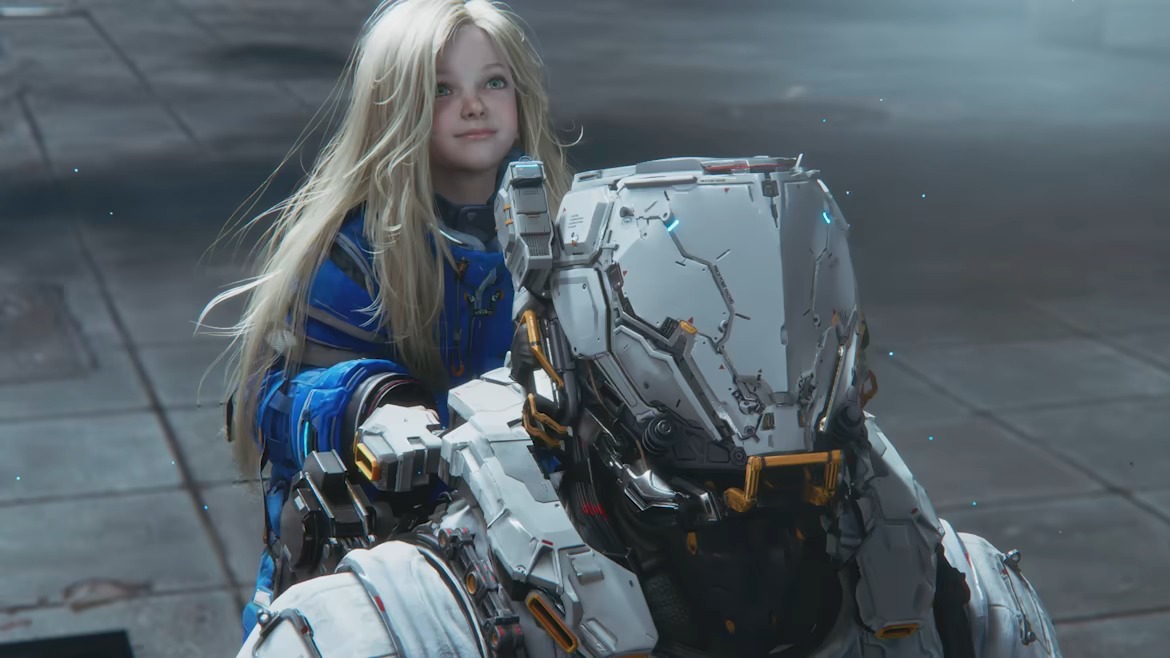
PRAGMATA Review — Two Minds, One Very Busy Combat System
PRAGMATA’s hack-and-shoot combat stayed fresh throughout my PC playthrough, while Hugh and Diana gave its lunar escape story a likeable heart. Corruption sometimes made the multitasking overwhelming, but the result remains an inventive 8/10 action-puzzle adventure.
Score: 8/10
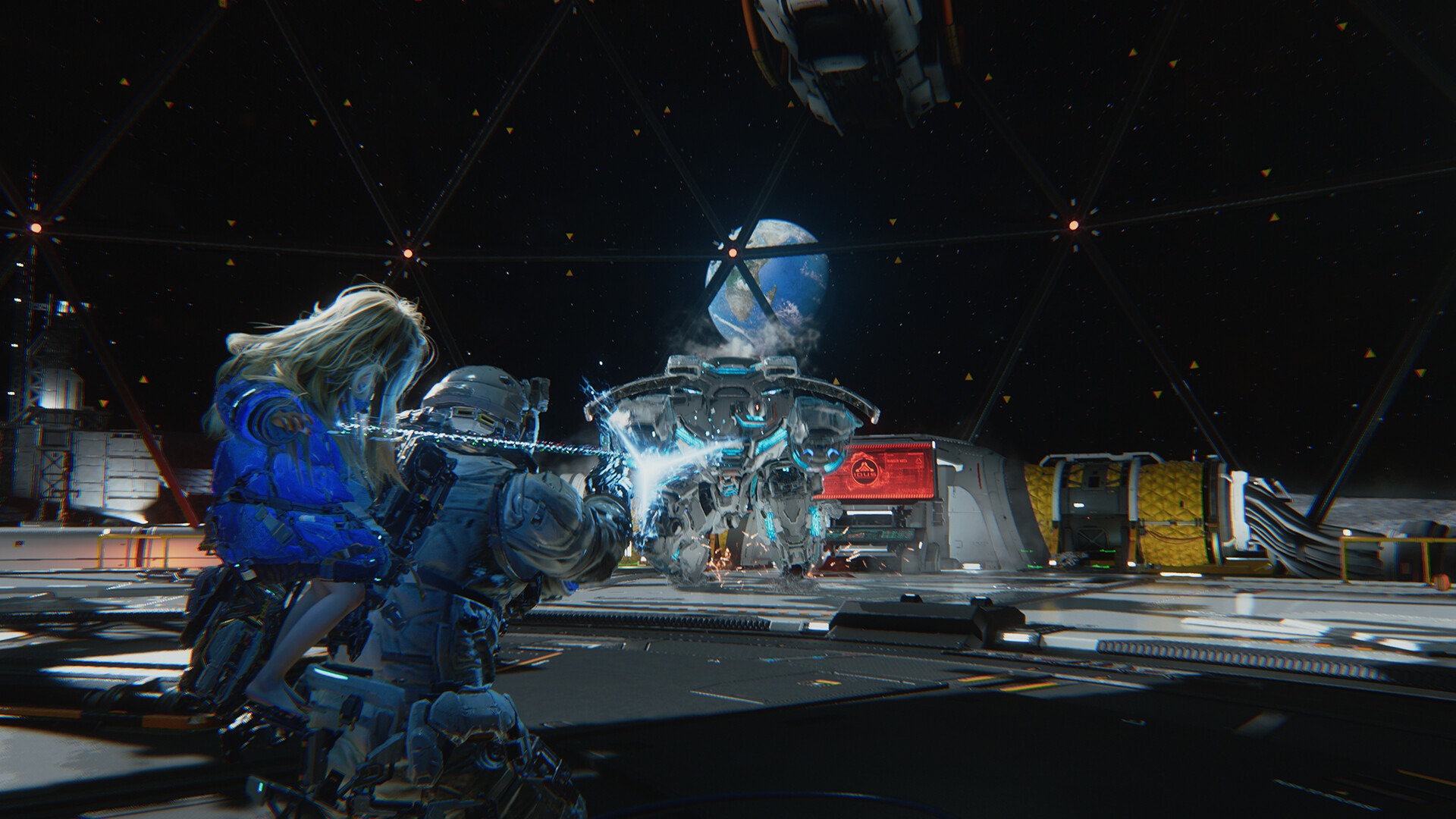
PRAGMATA asks me to move, aim, shoot, dodge, watch enemy attacks, and solve a hacking puzzle at the same time. That sounds like the game is trying to start an argument with my hands. Somehow, most of the time, it works.
I finished the game on PC through Steam after more than 20 hours, playing on what I believe was the Normal difficulty setting. The final game was about what I expected from the trailers: a polished Capcom sci-fi action game built around one unusual mechanical idea. The surprise was not that the hack-and-shoot combat worked. It was that the system continued to feel fresh across the full journey instead of becoming a short-lived gimmick.
PRAGMATA is not flawless. Once corruption starts adding more interference, hazards, and enemy pressure, its demand for constant multitasking can become genuinely overwhelming. Its story is also likeable rather than unpredictable. Even so, the central combat system gives the game a clear identity, and the relationship between Hugh and Diana gives that system a heart. I came away satisfied and comfortable giving it an 8/10.
What kind of game is it?
PRAGMATA is a single-player sci-fi action-adventure from Capcom. Hugh, a member of an investigation team, ends up stranded in a lunar research facility after a disastrous mission. He is rescued by Diana, a young android with powerful hacking abilities. With the station controlled by a rogue AI, the two have to cross the facility and find a way back to Earth.
The important part is that Hugh and Diana do not operate like two characters who simply take turns. I control Hugh’s movement, weapons, and jet-assisted mobility while using Diana to hack enemies in real time. Many machines cannot be damaged effectively until Diana breaks through their protection and exposes a vulnerable point. Hacking therefore is not a side activity or an occasional puzzle room. It sits directly inside the combat loop.
The combat system actually stays fresh
The hack-and-shoot combat is the strongest part of the game. Diana’s grid turns every target into a small action puzzle: I need to find a route to the execution point, take useful nodes when possible, avoid corruption and interference, and then capitalize on the opening with Hugh’s weapons. Because none of this pauses the battle, even a simple hack carries pressure.
At first, coordinating both sides of the system takes some adjustment. Once it clicked for me, though, it created a satisfying rhythm. Hack a target, expose its weakness, reposition Hugh, fire during the vulnerability window, and immediately begin reading the next problem. The game keeps my brain and hands engaged in a way that straightforward shooting rarely does.
What matters most is that this rhythm stayed enjoyable for more than 20 hours. PRAGMATA could easily have introduced one clever idea, repeated the same grid forever, and run out of energy halfway through. Instead, the interaction between enemy pressure and the hacking layer continued to make encounters feel active. I was rarely operating on autopilot because my attention always had somewhere else to go.
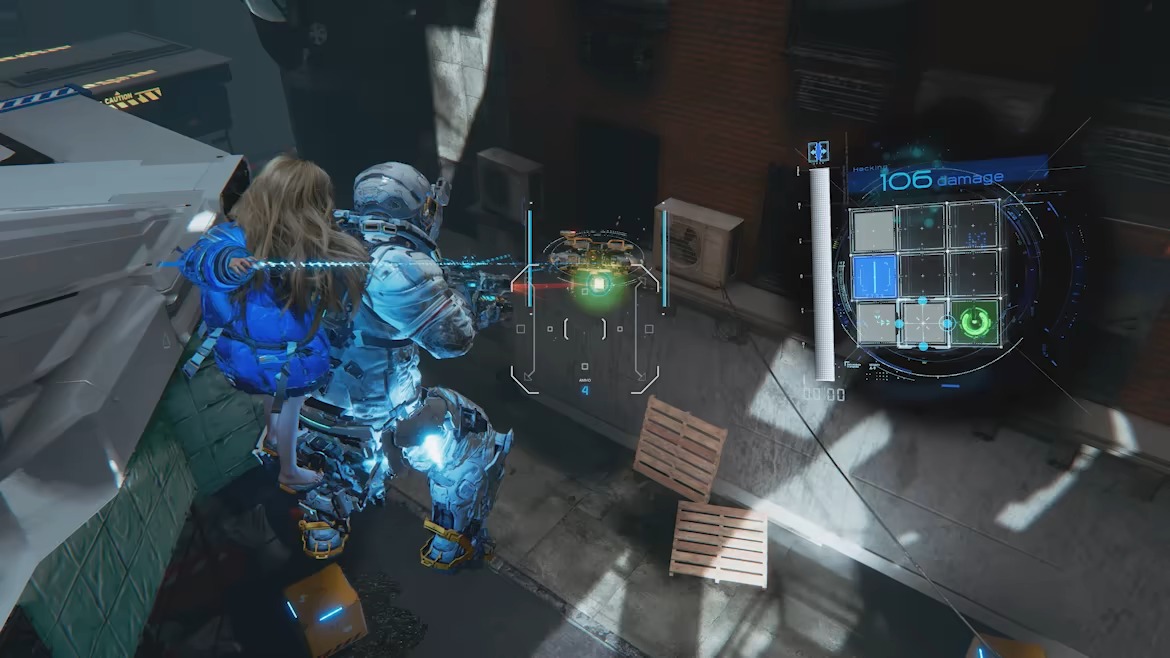
This system will not suit everyone. It is designed for players who enjoy action puzzles and are comfortable dividing their attention. If managing movement, aiming, target priority, and a grid puzzle at once sounds stressful rather than exciting, PRAGMATA may feel like work. For me, that mental load was usually the reason combat felt so distinctive.
Corruption pushes the idea too far
The main problem appears when corruption starts stacking additional complications onto an already busy system. Grid interference can block or complicate Diana’s routes. Enemy pressure gives me less time to read the puzzle. Environmental hazards demand another piece of my attention. Individually, each layer makes sense. Together, they can push the combat from satisfyingly demanding to overloaded.
This is where PRAGMATA occasionally loses the clean rhythm that makes it work. I might understand exactly what the game expects—move Hugh out of danger, read the altered grid, avoid the corrupted path, manage the surrounding enemies, and prepare the shot—but understanding the task does not make it comfortable to execute all at once.
I do not think this ruins the combat. In fact, some players will probably see these moments as the system reaching its full potential. For me, they were the point where multitasking stopped feeling elegant and started feeling overwhelming. The game is at its best when hacking and shooting support one another. It is less enjoyable when every layer seems to demand priority at the same moment.
Hugh and Diana make the journey work
Outside the combat, the strongest part of PRAGMATA is Hugh and Diana themselves. The premise could have produced a cold story about an abandoned facility, hostile machines, and another rogue AI. Their companionship gives the journey warmth.
Diana is not just a mechanic sitting on Hugh’s back, and Hugh is not just the person carrying the guns. Their growing trust gives context to the constant cooperation I perform during combat. The gameplay says that neither character can get through the facility alone, while the story gradually makes that dependence personal.
Their relationship is likeable even when the larger plot is predictable. I did not need every revelation to surprise me because I enjoyed spending time with the pair. Their bond also helps the quiet stretches of the lunar facility. The setting is isolated and artificial, but the game does not feel emotionally empty because Hugh and Diana are always building toward something together.

Full spoilers: a predictable but satisfying ending
The ending follows the emotional direction I expected. Hugh’s infection by the Dead Filament cannot be safely cleansed, and his condition turns the escape into a choice rather than a victory for both characters. He ultimately sacrifices himself so Diana can leave the lunar station and reach Earth.
I could see the shape of that ending coming because the story spends so much time building Hugh’s protective relationship with Diana and establishing the danger of his infection. That predictability reduces some of the shock, but it does not make the conclusion ineffective. The sacrifice completes the promise at the center of their partnership, and Diana’s escape gives the journey a clear emotional destination.
For me, the ending was satisfying rather than devastating. It delivered the payoff the story had prepared, even if it did not overturn my expectations. That matches my view of the narrative as a whole: the plot is familiar, but the central duo is strong enough to carry it.
The PC version was mostly good
My experience on PC through Steam was mostly good. I do not have one recurring bug, performance issue, or control problem that I can point to as a serious complaint. I also was not monitoring frame-time graphs or running controlled benchmarks, so I would not present this as a technical performance test.
Final thoughts
PRAGMATA succeeds because it commits to its strangest idea. Controlling Hugh and Diana at the same time could have become an annoying novelty. Instead, the combination of real-time hacking and third-person shooting becomes the reason to play, and it stays fresh across a full campaign.
The trade-off is clear. When corruption, environmental hazards, grid interference, and enemy pressure arrive together, the system can ask for more attention than I comfortably want to give it. The story also takes a predictable route, even though Hugh and Diana remain an enjoyable pair and their ending lands well enough.
I would recommend PRAGMATA most strongly to action-puzzle fans—especially players who enjoy learning an unusual combat rhythm and juggling several decisions under pressure. Players looking for a relaxed shooter or a story full of shocking twists may not get as much from it.
For me, this is an 8/10: inventive, polished, and memorable for the right reasons, even when it occasionally makes my brain feel like it needs a second controller.